Architecture Students Reimagine Longton
Hybrid City Designs
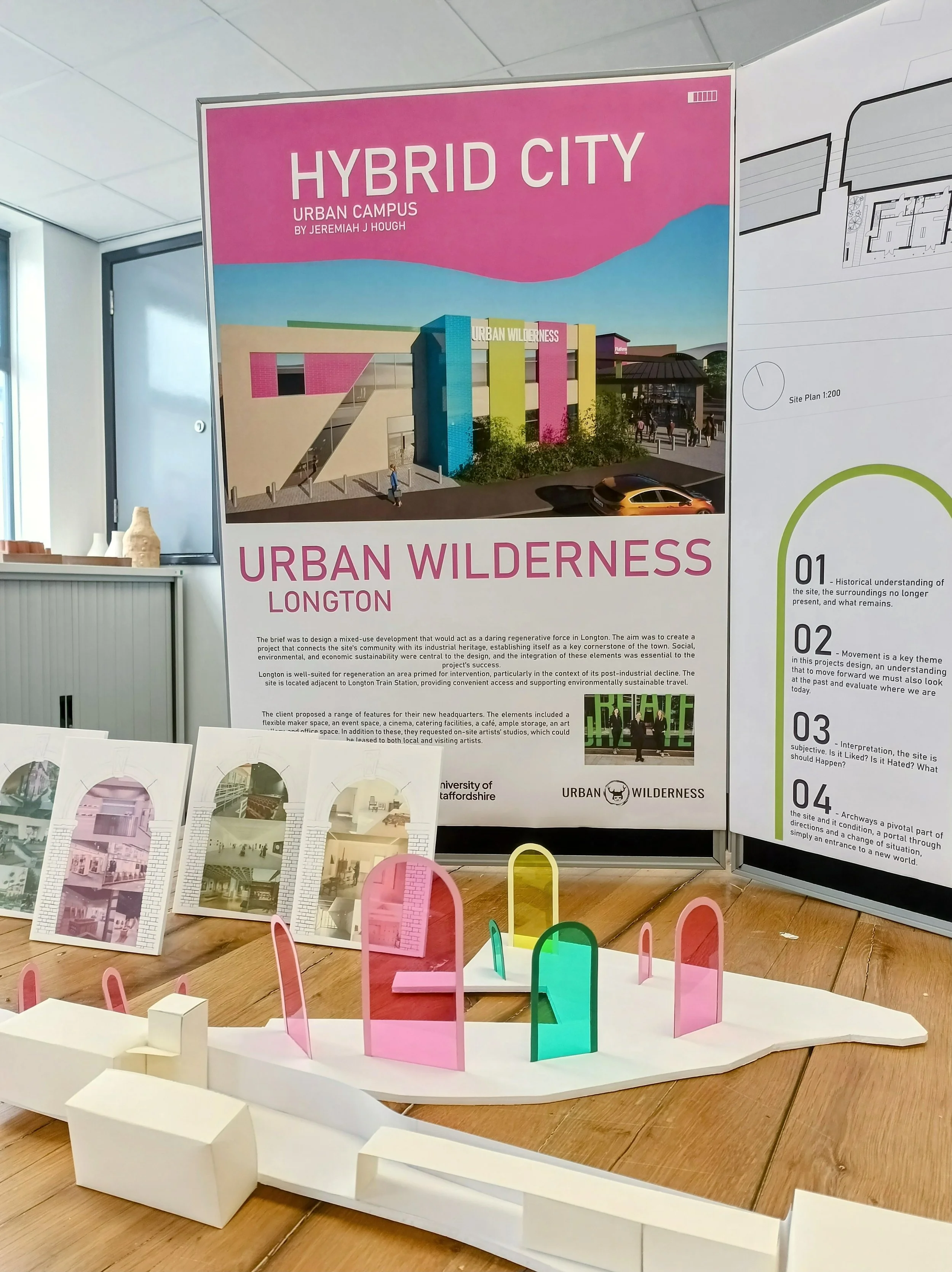
Urban Wilderness CIC set a live brief for architecture students at the University of Staffordshire, inviting them to reimagine part of Longton town centre through bold, community-focused design.
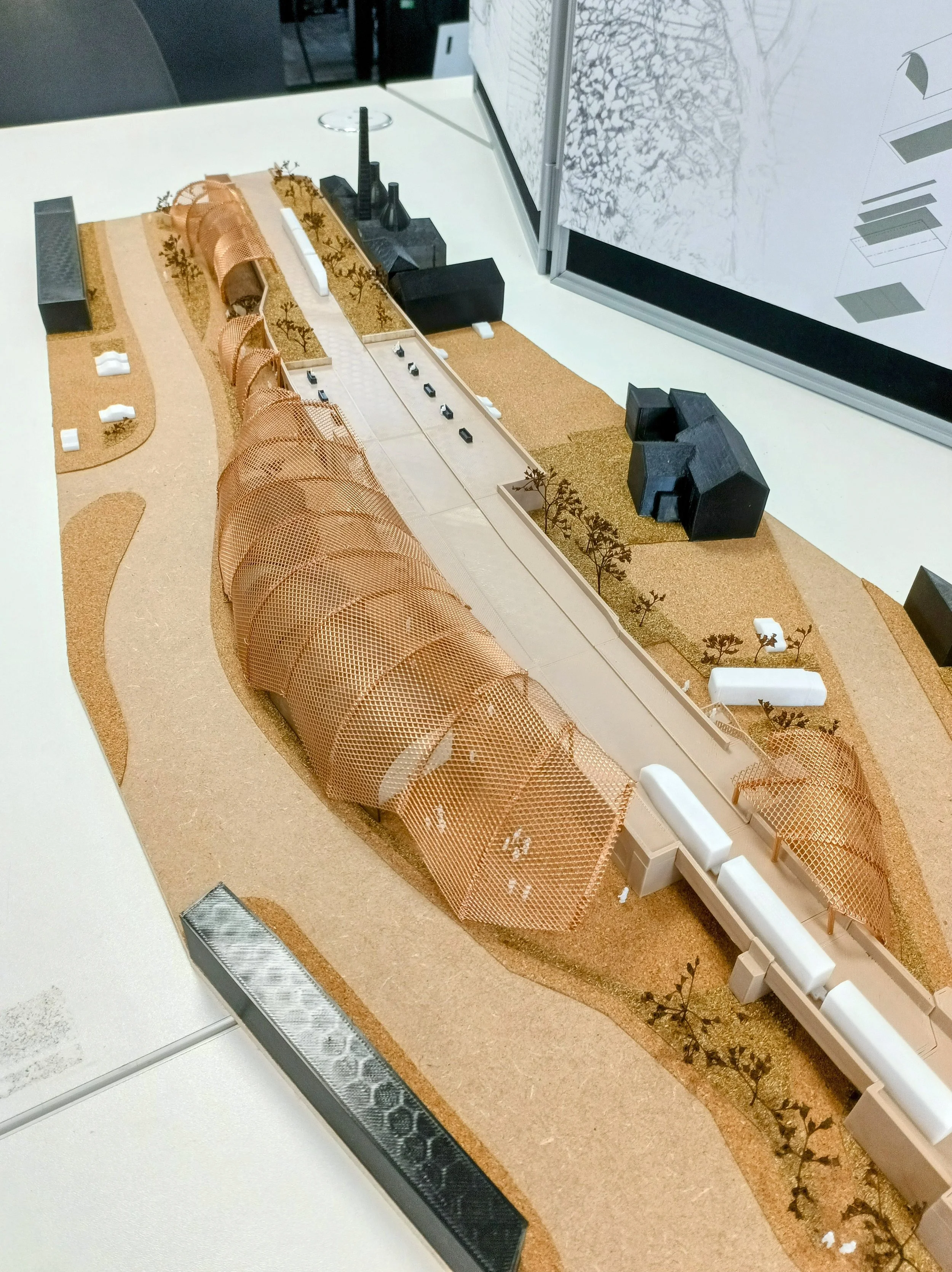
Acting in the role of client, Urban Wilderness worked with students on the ‘Stoke-on-Trent: Hybrid City’ project, which explored how architecture might support cultural regeneration, creativity and everyday life in Longton. The brief focused on land along Baths Road, next to Longton train station — a gateway site with strong connections to the town centre and wider region.
The final design proposals were ambitious and thoughtful, responding to both local context and future potential. Students presented concepts that included performance and gallery spaces, artist studios, temporary accommodation, cinemas, improved access to the train platform, and shared creative headquarters combining making space, storage and offices. Many proposals imagined expanded space for arts and community organisations, embedding culture at the heart of the town’s infrastructure.
Urban Wilderness co-director Jenny Harper visited the University of Staffordshire to see the students present their final projects and was struck by the care, creativity and optimism within the work. The designs demonstrated how architecture can act as a catalyst for social connection, economic activity and civic pride.
Following the presentations, Urban Wilderness displayed the students’ designs at The Moony Club, making the work publicly accessible and inviting the Longton community to see, discuss and be inspired by new possibilities for their town.
This collaboration reflected a shared commitment between Urban Wilderness, the University of Staffordshire and its architecture course to support civic dialogue, future-focused thinking and meaningful engagement with place. By bringing student visions directly into the town, the project helped connect academic practice with lived experience — and ensured young designers’ ideas became part of Longton’s ongoing conversation about regeneration and change.