Participatory Storytelling for Nature Recovery
Partnership with Keele University & Natural England
At Urban Wilderness, we believe that people protect the places they feel connected to. Our work in parks, brownfield sites and post-industrial landscapes has shown us how creativity, imagination and collective storytelling can shift how people see the natural world — and their role within it.
This collaboration with Keele University and Natural England grew directly out of that belief. Together, we explored how participatory storytelling and arts-based approaches can help communities build stronger, more meaningful relationships with the natural environment, particularly in places where access, confidence or past experiences have created barriers.
The project was led by Dr Pawas Bisht from Keele’s School of Humanities, bringing together researchers whose practice intersects with our own — blending creativity, landscape and community experience to better understand how people connect with the places around them.
Why this work matters
During the pandemic, many people rediscovered green and wild spaces. At the same time, long-standing inequalities in who feels welcome or safe in nature became more visible than ever. Some communities live within sight of parks, canals or nature reserves but feel unable to enter them — through unfamiliarity, fear, or not seeing themselves reflected in how those spaces are used or cared for.
Nature recovery isn’t only about restoring habitats.
It’s about restoring relationships between people and place.
Through creative methods — from drawing and building to storytelling and imaginings — people can begin to see natural spaces as sites of belonging rather than exclusion. This project created opportunities to witness that process in action.
Fieldwork at Wybunbury Moss – a living example
One strand of the research, Participatory Storytelling: Art Club at Wybunbury Moss, captures exactly why this work matters.
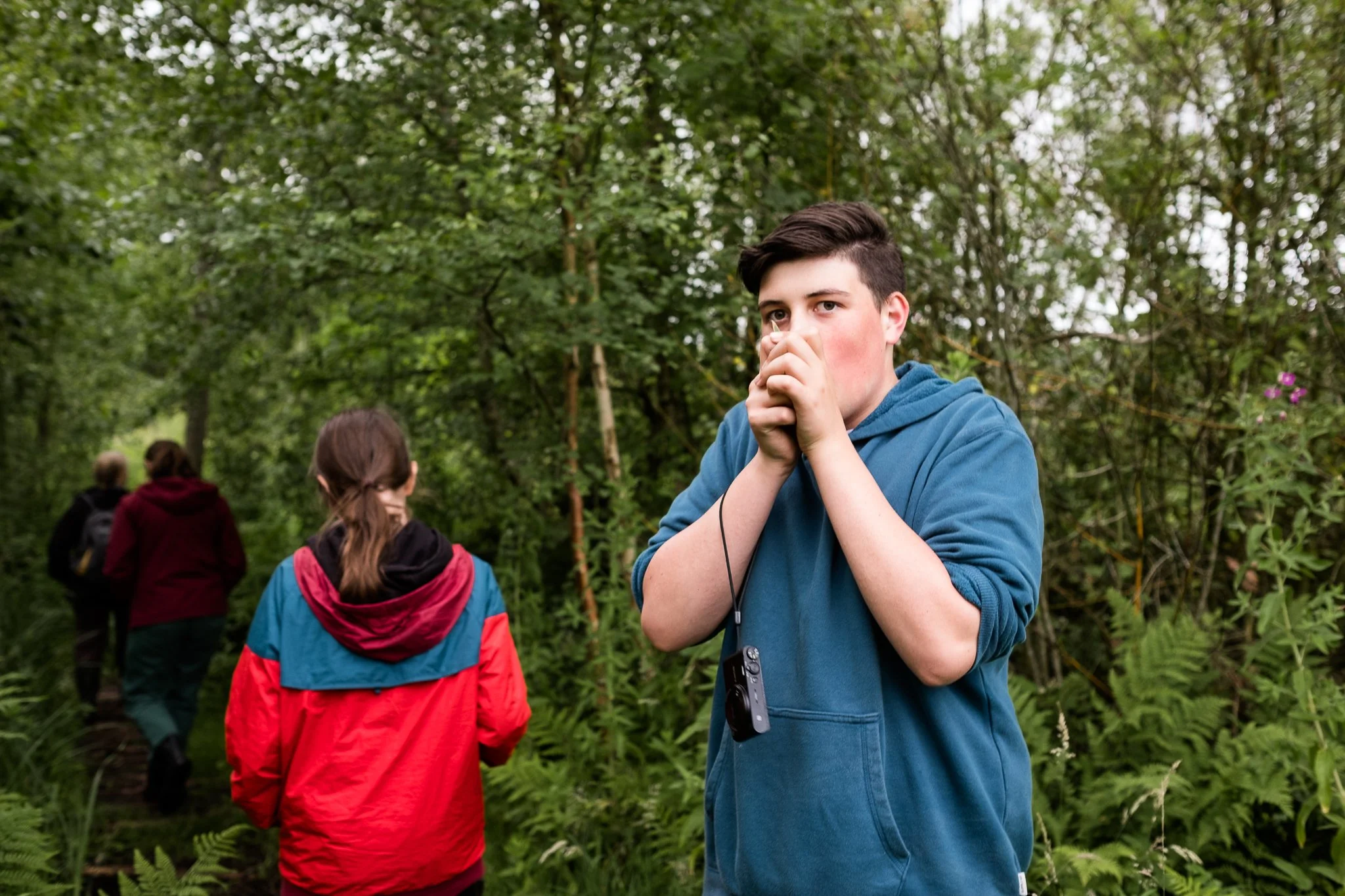
Art Club is a group of 14-year-olds who carry big stories of their own — anxiety, neurodiversity, trauma, and the weight of two years spent largely at home. They are bold, expressive, noisy and brilliant. Taking them to Wybunbury Moss, a rare and fragile peat bog, created a powerful meeting between the group and a landscape unlike anything they had experienced.
The Moss is quiet, ancient and strange. Beneath the soft ground are deep pools of black water that have existed for centuries. With ranger Jenni Tibbets as guide, the young people learned to read the landscape: how the path disguises itself, how trees die and regrow, how the whole place sits on shifting ground.
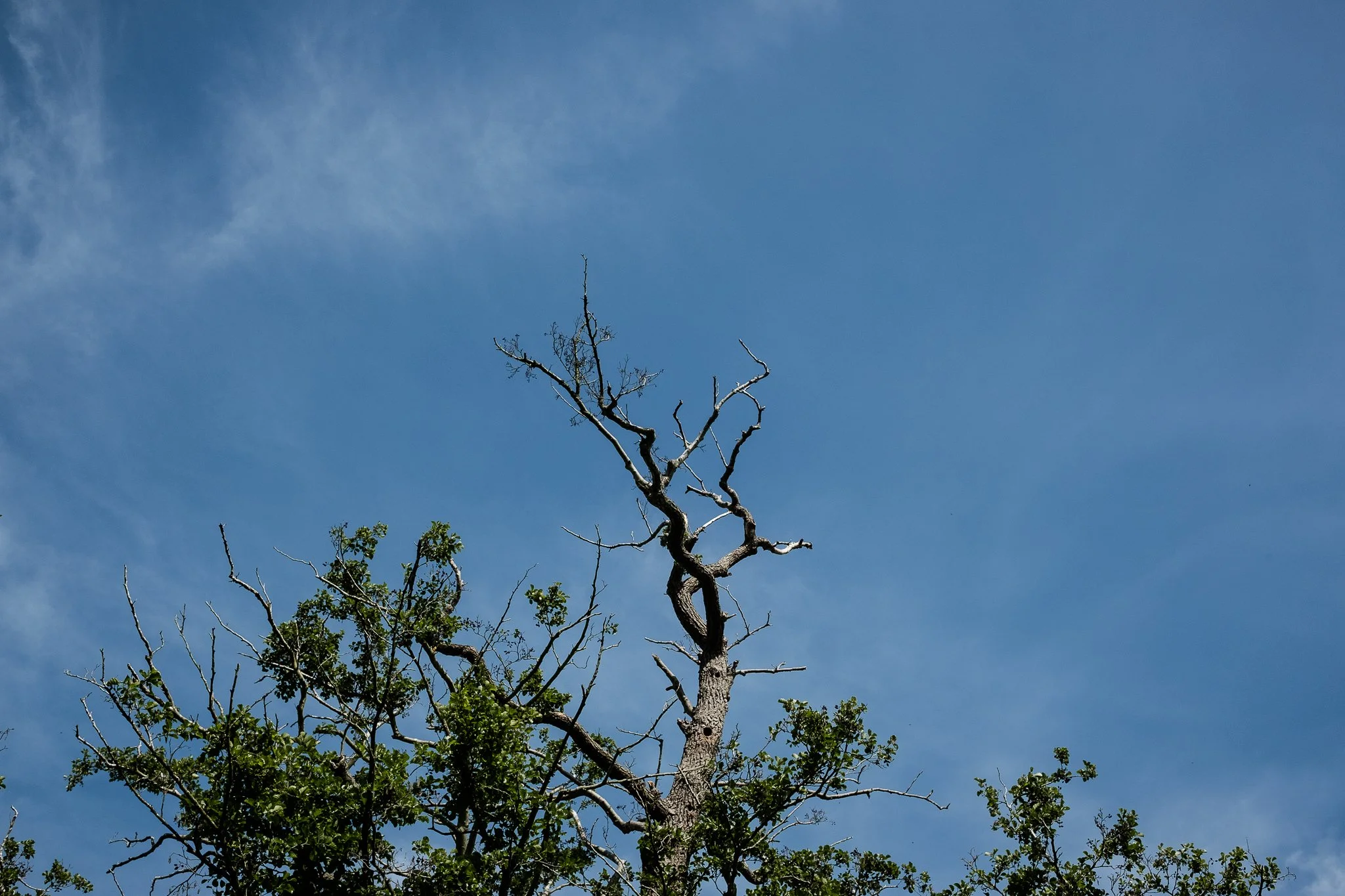
Their usual loud performances softened into moments of surprise and awe. One young person froze mid-step, suddenly aware of the depth beneath him. A week later in Art Club, he recreated the Moss in collage and recited its geological story in perfect detail. Something in that landscape had stayed with him.
The group connected with ideas of resilience and adaptability — especially the “resurrection trees” and the cultivated sphagnum moss being reintroduced to support the bog’s fragile ecosystem. They turned “Be the Moss” into both a joke and a philosophy, understanding themselves through the story of the place.
This is the power of participatory storytelling:
it invites people to encounter a landscape emotionally, imaginatively and on their own terms.
Closing reflections
Our involvement in this research programme highlighted what we see every day in our own practice: when people are given time, attention and creative tools, natural spaces become places of connection rather than separation.
For the young people at Wybunbury Moss, storytelling offered a way to step into an unfamiliar environment and find meaning there. For us, it reinforced how essential creativity is in building relationships between communities and the landscapes that surround them.
This collaboration is now complete, but its insights continue to inform how we work — reminding us that even the quietest places can speak loudly when we make space to listen.