Sky Works Artist Commission
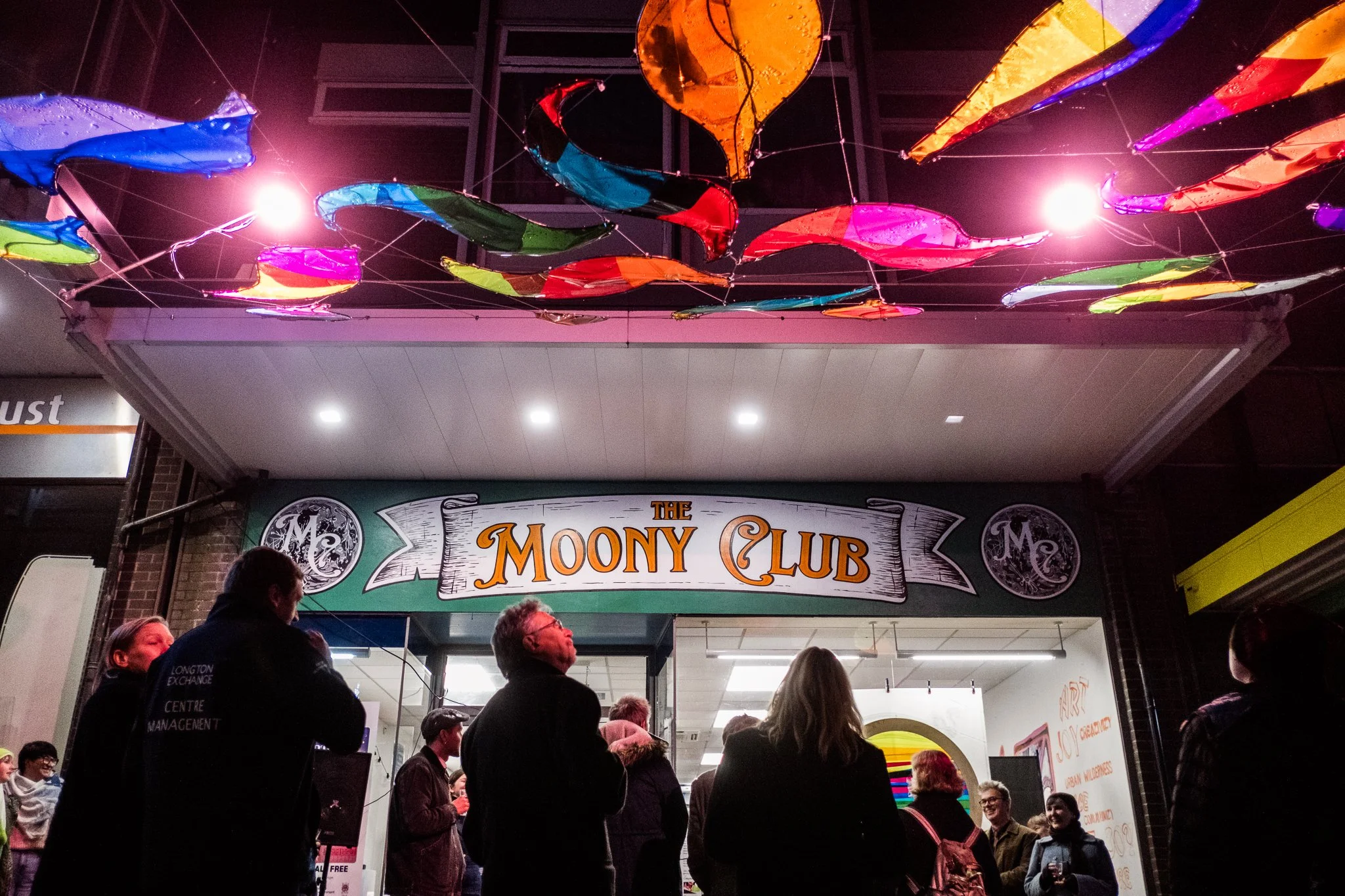
Urban Wilderness CIC commissioned sculptor Raphael Daden to create a new public artwork for the Sky Works Canopy in front of The Moony Club in Longton town centre. Titled Where Are the Trees? Where Are the Birds?, the installation invited reflection on the absence of nature in the built environment and asked how light, sound and imagination might reintroduce a sense of canopy, habitat and care into an urban setting.
About the Artist: Raphael Daden
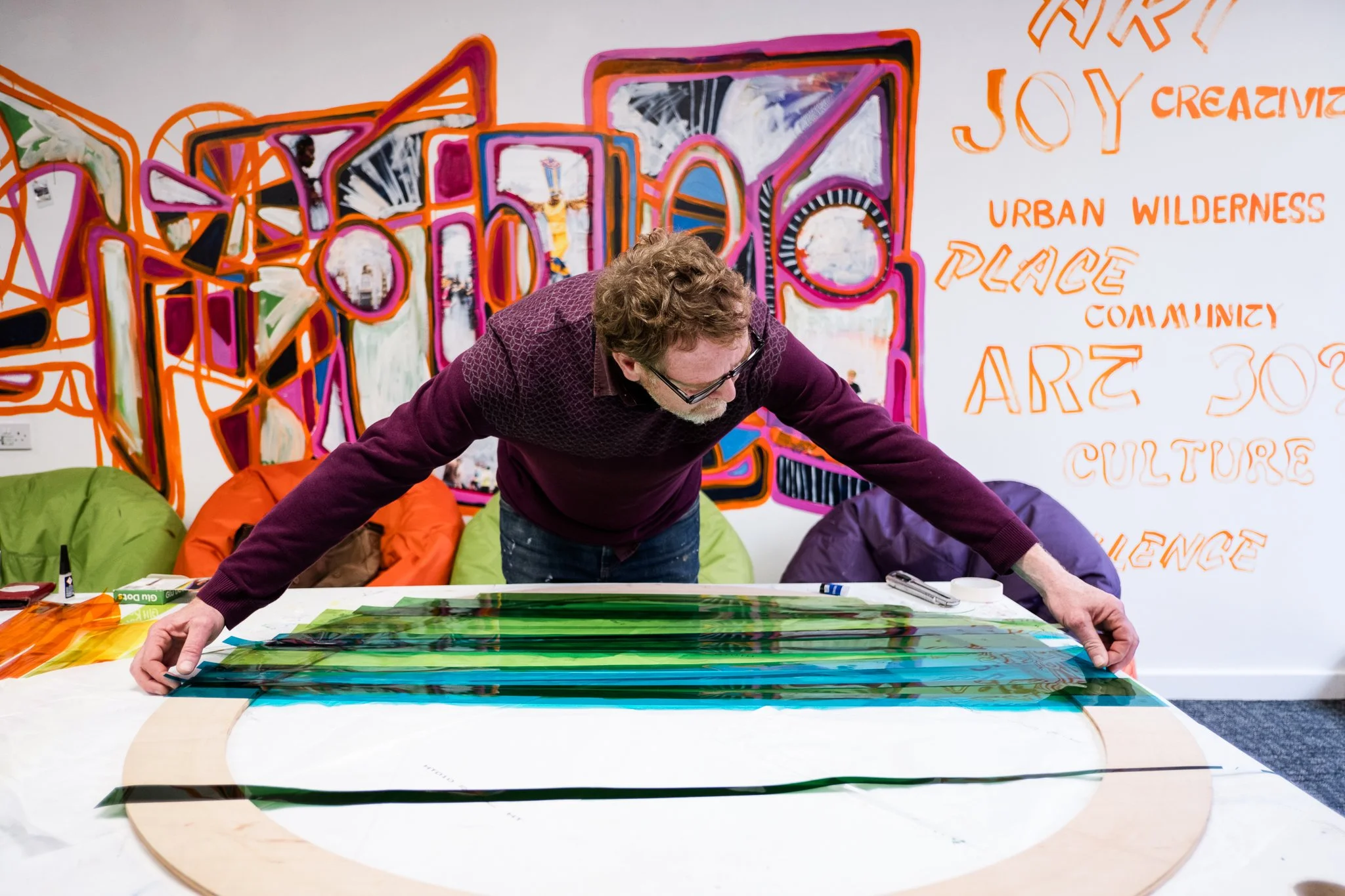
Raphael Daden is a Nottingham-based sculptor whose practice explores the emotional, spatial and psychological impact of light and colour in public space. For over a decade, he has worked with materials such as resin, acrylic and glass, combined with LEDs and neon, to create sculptural installations that abstract light away from its commercial associations and reframe it as something poetic, atmospheric and contemplative.
Raphael’s work is rooted in the belief that light can transform how places feel — shaping mood, encouraging reflection and altering the way people move through space. His sculptures have featured in major public art commissions, gallery exhibitions and Arts Council-funded projects across the UK and internationally. In public settings, his work often acts as a quiet interruption — inviting people to pause, look up and experience familiar environments differently.
The Sky Works Installation
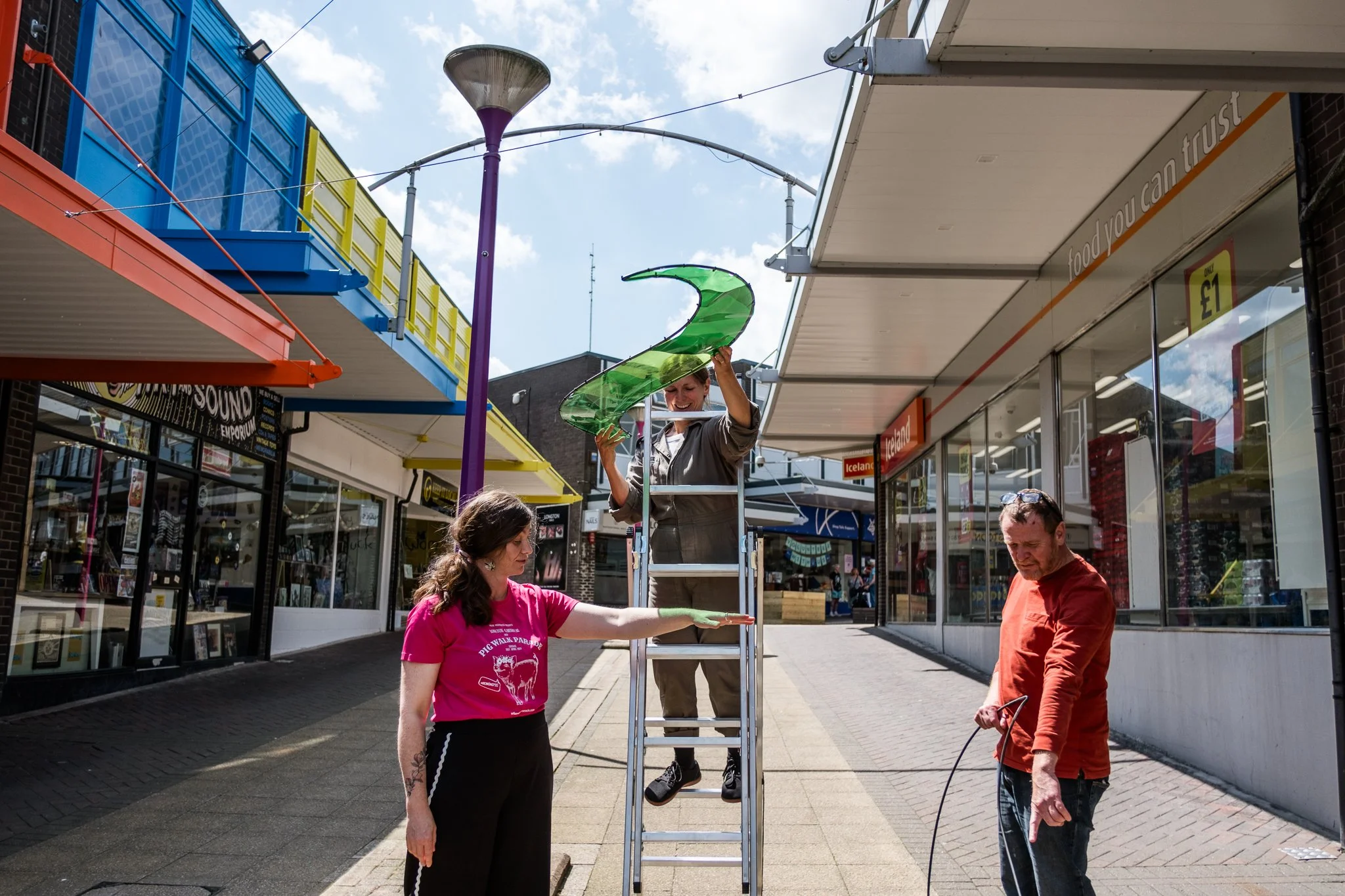
Suspended on catenary wire above the public realm, the Sky Works installation drew inspiration from a natural tree canopy — a structure that offers shelter, shade and life, yet is largely missing from Longton’s town centre. Through layered colour, rhythm and glow, Raphael’s light installation evoked the presence of trees and birds without depicting them literally.
Rather than functioning as decoration, the work created an atmosphere — one that softened the commercial landscape of the shopping centre and encouraged reflection on what is absent, overlooked or possible within urban space.
Birdsong, Biodiversity and Sound
The installation was accompanied by a bespoke birdsong soundscape by artist Leanne Cunningham, adding a sensory layer rooted in local ecology. The soundscape was created from an early-morning dawn chorus recording at Berry Hill Fields, Stoke-on-Trent, captured during a community nature walk in September 2023.
It featured field recordings, birdsong and conversation with Professor Deirdre McKay and bird expert and ecologist Dr Christian Devenish, and was compiled and edited by Leanne Cunningham. The work was produced by Urban Wilderness CIC and funded by Keele University as part of the Wilder Connections project exploring local biodiversity.
Together, the light and sound works brought nature back into the town centre — not as an image or symbol, but as presence.
Sky Works Launch – Thursday 14th November 2024
The installation was launched through a public evening event titled:
Sky Works – Where Are the Trees? Where Are the Birds?
Thursday 14th November 2024
The launch tested Longton Exchange as an outdoor social space after dark, transforming the shopping centre into a place of gathering, reflection and celebration. Local independent businesses KILN@No12 and the Moroccan Café provided street food, reinforcing the role of culture in supporting the local economy.
Speeches were given by the Lyn Sharpe Lord Mayor of Stoke-on-Trent, David Amigoni on behalf of Stoke Creates (whose CASCADE place-based arts funding supported the installation), Professor Deirdre McKay on behalf of Keele University speaking about biodiversity, and Chris Ward, Shopping Centre Manager at Longton Exchange.
Chris Ward noted that without Urban Wilderness CIC’s presence, none of the current regeneration activity would be happening in Longton — “it would be happening wherever they were based.”
Regenerating the Public Realm
Where Are the Trees? Where Are the Birds? demonstrated how public art can extend beyond aesthetics. By combining light, sound, biodiversity research and collective gathering, the project reimagined Longton town centre as a space of care, possibility and shared ownership — showing how culture can play a vital role in shaping healthier, more connected urban futures.